
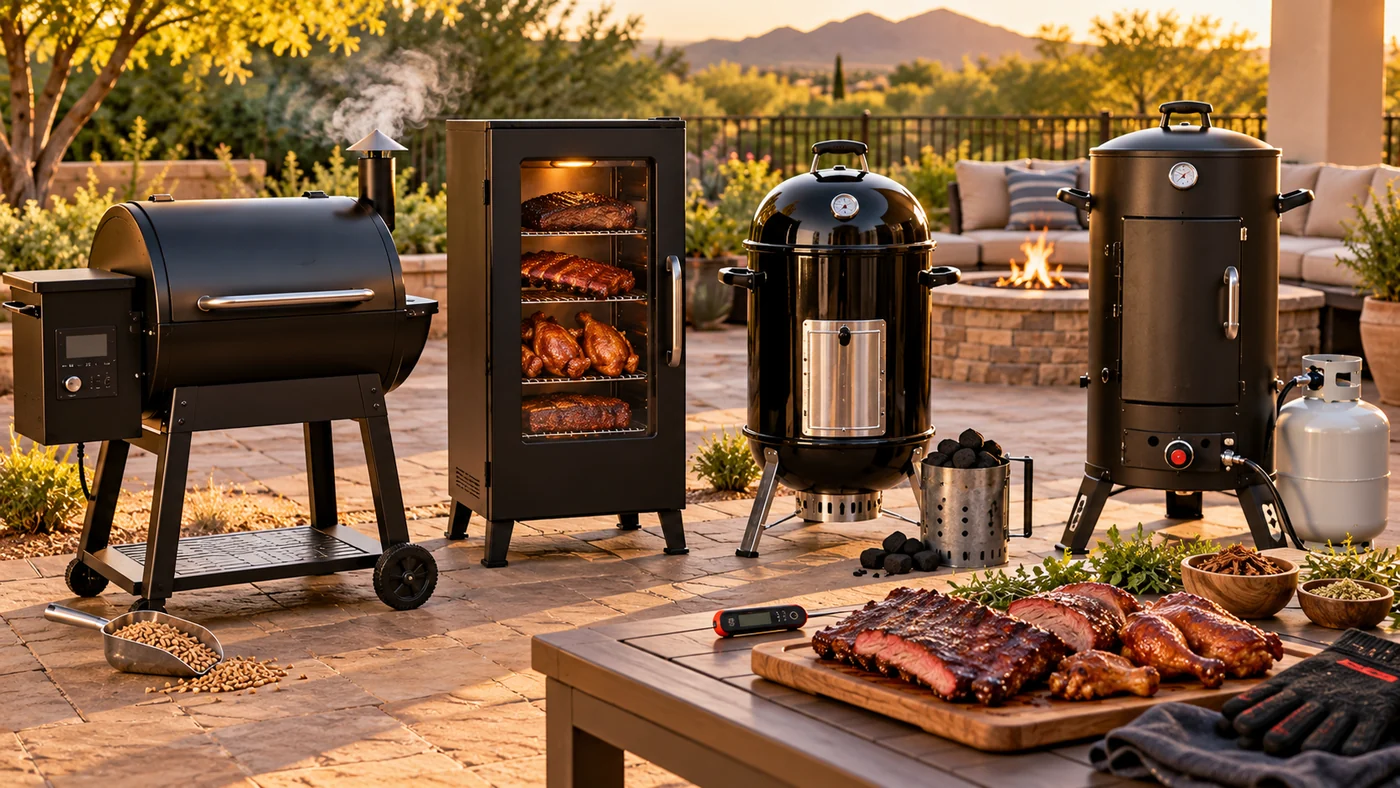
The best entry-level smoker is not automatically the cheapest smoker. A good first smoker should fit the way you actually want to cook. If you want push-button temperature control, pellet and electric smokers are easiest. If you want a stronger traditional smoke profile and do not mind managing airflow, charcoal is an excellent teacher. Propane sits between those approaches, while offset smokers offer a highly traditional experience but require the most fire management.
Five Main Smoker Types for Beginners
Entry-Level Smoker Prices at a Glance
These are practical 2026 shopping ranges, not hard limits. Sales and retailer-exclusive models can move significantly above or below them.
| Type | Typical entry range | Operating style | Best beginner advantage | Main tradeoff |
|---|---|---|---|---|
| Electric | About $230–$300 | Plug in, set temperature, add chips | Lowest learning curve | Less intense smoke profile; needs power |
| Charcoal vertical | About $140–$420 | Manage vents, charcoal and wood chunks | Great smoke flavor for the money | More hands-on temperature control |
| Pellet | About $350–$550 | Digital controller feeds pellets | Set-and-monitor convenience | Higher purchase price; electronics and power required |
| Propane vertical | About $300–$400 | Gas burner plus wood chip tray | Simple heat adjustment and fast startup | Propane tank management; milder wood-fire character |
| Offset | About $200–$500 | Tend wood/charcoal fire in side box | Traditional barbecue experience | Most demanding for beginners |
Which Type Is Easiest to Learn?
Editorial ease-of-use comparison for a first-time backyard smoker, not laboratory testing.
Representative Entry-Level Smokers to Compare
| Model | Type | Observed price | Key specifications / features | Review snapshot | Best for |
|---|---|---|---|---|---|
| Cuisinart 16-in Vertical Charcoal Smoker | Charcoal | $139.99 | Compact vertical water-smoker format; simple charcoal-and-wood operation. | Cuisinart listed 4.3/5 from 22 customer reviews during research. The format appeals to buyers who want traditional smoke without buying a large cooker. | Budget-first beginners willing to learn vent control. |
| Masterbuilt 30-in Digital Electric Smoker | Electric | $249.99 | Digital temperature/time controls, side wood-chip loader, vertical cabinet layout; current manufacturer listing describes it as beginner-friendly. | Common owner themes for digital electrics are easy setup, steady low-temperature cooking and convenient chip loading. Typical criticism centers on lighter smoke flavor and reliance on the heating element/electronics. | First-time users who value simplicity. |
| Weber Smokey Mountain 14 | Charcoal | $289 | Purpose-built charcoal water smoker with a compact footprint; traditional vent-controlled design. | The Smokey Mountain line has a long-standing enthusiast following because it can run low and slow for long cooks once the vents are dialed in. Beginners should expect a short learning period. | People who want classic charcoal barbecue technique. |
| Pit Boss Carbon Series 500 | Pellet | $349.99 | 543 sq. in. cooking space, 13.5-lb hopper, meat probe, hardwood pellet fuel. | Pit Boss showed 4.5/5 from 14 reviews during research. Early review themes favor convenience, compact size and pellet-fired versatility; as with all pellet cookers, electronics and auger components add complexity. | Value-conscious pellet beginners. |
| Masterbuilt 40-in ThermoTemp XL | Propane | $399.99 | 960 sq. in. cooking space, vertical cabinet, propane heat source with wood smoke. | Propane-smoker owners generally appreciate fast startup and simple burner adjustment. Common concerns include wind sensitivity, keeping the chip tray smoking consistently and propane-bottle management. | Large-capacity cooks without electrical dependence. |
| Pit Boss 500FB2 | Pellet | $399.99 | 518 sq. in., 180–500°F digital range, 5°F increments, included meat probe and direct-flame searing feature. | Pit Boss listed 4.6/5 from 226 reviews on one current listing. Recurring positives include value, versatility and easy temperature control. | Beginners who want both smoking and grilling. |
| Traeger Pro 22 | Pellet | $549.99 | 572 sq. in. cooking area, established pellet platform and broad recipe/support ecosystem. | Traeger displayed 742 reviews on the Pro 22 listing during research. Owners commonly value predictable temperature management and ecosystem support; the obvious drawback is paying more than entry pellet alternatives. | Beginners willing to spend more for an established platform. |
Pellet Smokers: The Easiest Wood-Fired Path
A pellet smoker burns compressed hardwood pellets that an electric auger feeds into a fire pot. A controller watches temperature and adjusts pellet delivery and fan operation. That automation is the reason pellet smokers are so approachable.
For a deeper look at features, brands and what matters most before buying, see our Pellet Smokers: What to Look For guide.
Benefits
- Excellent temperature stability for long cooks.
- Minimal fire tending compared with charcoal or offsets.
- Many models can grill, roast and bake as well as smoke.
- Easy repeatability when learning brisket, ribs and pork shoulder.
What to watch for
- Hopper size and expected run time.
- Controller precision.
- Availability and cost of pellets.
- Protection from moisture—pellets can swell and jam if stored wet.
- Electronics, fans and augers add potential service points.
Charcoal Smokers: Best Teacher for Traditional BBQ
Vertical charcoal smokers such as the Weber Smokey Mountain and smaller budget water smokers are a strong middle ground. They can hold steady temperatures for hours, but the cook still learns how vents, charcoal arrangement, weather and fuel load affect the fire.
Why they remain popular
- Strong traditional smoke flavor.
- No electrical components required.
- Charcoal and wood chunks are widely available.
- Mechanical designs can last many years with basic care.
What Beginner Smoker Reviews Usually Reveal
Temperature stability matters more than gadgets
Owners are happiest when a smoker holds the set temperature without constant correction. Reliable control makes recipes repeatable and shortens the learning curve.
Assembly quality affects the first impression
Complaints often involve misaligned doors, loose hardware, damaged shipping cartons or time-consuming assembly rather than cooking performance itself.
Small smokers fill up quickly
Compact models are easy to store, but owners who begin cooking multiple racks of ribs or several pork shoulders often wish they had bought one size larger.
Pellet users love convenience
Beginner pellet owners frequently praise being able to set a temperature and focus on food preparation rather than tending a fire.
Charcoal users value flavor and simplicity
Once the airflow is understood, owners often appreciate that a charcoal smoker has few components to fail and does not require electricity.
Cleaning is a bigger ownership issue than expected
Grease trays, water pans, ash, pellet dust and creosote all need attention. A model that is easy to clean is more likely to be used often.
How Much Cooking Space Do You Need?
| Household / use | Useful capacity target | What it usually handles |
|---|---|---|
| 1–2 people | 300–500 sq. in. | A pork shoulder, several chicken pieces, small brisket or a couple racks when arranged carefully. |
| Family of 3–5 | 500–700 sq. in. | Whole brisket, several chickens, multiple pork butts or several racks of ribs. |
| Regular entertaining | 700–1,000+ sq. in. | Larger batches without crowding racks or constantly rotating food. |
Square-inch specifications are helpful but not perfect. A tall vertical cabinet may have plenty of total rack area but not enough width for a full brisket unless you trim or angle it. Check rack dimensions, not just the total number.
Fuel Cost, Maintenance and Long-Term Ownership
| Type | Fuel / power | Routine maintenance | Long-term ownership note |
|---|---|---|---|
| Pellet | Wood pellets + electricity | Vacuum ash, clean grease tray, protect pellets from moisture | Controller, fan, igniter and auger can eventually need service. |
| Electric | Electricity + wood chips | Clean racks, water pan, chip tray and grease deposits | Simple to use; heating elements/controllers are the main wear components. |
| Charcoal | Charcoal + wood chunks | Dump ash, brush grates, manage grease and water pan | Few mechanical parts; rust prevention matters. |
| Propane | Propane + wood chips/chunks | Clean burner area and chip tray; inspect hose/regulator | Keep a spare cylinder if long cooks are common. |
| Offset | Charcoal and/or split wood | Remove ash, scrape chamber, protect steel from rust | Heavy steel generally performs better, but costs and weighs more. |
Features Worth Paying For on a First Smoker
- A reliable thermometer: built-in lid gauges can be useful, but a separate digital probe at grate level is more informative.
- Easy-access fuel loading: side chip loaders, large pellet hoppers and access doors reduce heat loss.
- Grease management: removable pans and trays make cleanup much easier.
- Replaceable parts: igniters, probes, controllers, grates and seals should be obtainable.
- Weather protection: a fitted cover materially improves the life of painted steel and electronics.
- Stable legs and wheels: a loaded smoker can be heavy; mobility matters more than many first-time buyers expect.
- Useful rack dimensions: measure the actual grate width for brisket and ribs.
What You Can Skip at the Entry Level
Wi‑Fi, large touchscreens and elaborate app features are convenient, but they should not take priority over steady temperature control, solid construction, easy cleaning and available replacement parts. A $30–$60 dual-probe thermometer can add remote monitoring to almost any smoker without locking you into a specific appliance ecosystem.
Beginner Smoker Setup: What Else to Buy
| Accessory | Why it helps | Priority |
|---|---|---|
| Instant-read thermometer | Checks doneness quickly and accurately. | Essential |
| Leave-in dual-probe thermometer | Tracks meat and grate temperature through long cooks. | Essential |
| Heat-resistant gloves | Safer handling of grates, pans and hot food. | High |
| Chimney starter | Fast, chemical-free charcoal ignition. | Essential for charcoal |
| Smoker cover | Protects steel, controllers and finishes from weather. | High |
| Grease liners / foil pans | Speeds cleanup and catches drippings. | Useful |
| Quality fuel storage | Keeps pellets dry and charcoal protected. | Useful |
Safety Basics
- Use smokers outdoors only and follow the manufacturer’s required clearance from structures and combustible surfaces.
- Never operate a smoker in a garage, enclosed patio or other enclosed area because of carbon monoxide and fire risk.
- Keep grease accumulation under control.
- For propane models, inspect hoses and connections and store cylinders according to local fire-code guidance.
- Use grounded, outdoor-rated electrical connections for electric and pellet smokers.
- Allow ash and charcoal to cool completely before disposal in a noncombustible container.
Bottom Line
For the easiest first experience, an electric smoker is hard to beat. For convenience with authentic hardwood fuel, a pellet smoker is the strongest all-around choice. A charcoal vertical smoker is ideal for someone who wants to learn traditional barbecue technique and prioritize smoke flavor. Propane is a practical niche choice, while an offset is best for a beginner who specifically wants fire management to be part of the hobby.
Before You Buy
- Choose your fuel type before choosing a brand.
- Measure the patio or storage space.
- Check rack dimensions, not just total square inches.
- Price the fuel you will use locally.
- Look for replacement parts and warranty support.
- Budget for a good thermometer and cover.
- Contact the manufacturer or authorized dealer for current pricing and availability.
More Outdoor Living Guides
Research Sources & Methodology
This article cross-checked current manufacturer pricing, specifications and review information available on September 28, 2026. Review commentary is presented as generalized ownership themes rather than as laboratory performance testing. Prices and availability change frequently.
- Weber — Smokey Mountain Cooker Smoker lineup
- Masterbuilt — Digital Electric Smokers
- Masterbuilt — Smoker range and specifications
- Pit Boss — Carbon Series 500
- Pit Boss — 500FB2 Wood Pellet Grill
- Traeger — Pro 22
- Cuisinart — Smokers & Pellet Grills
- Cuisinart — 30-in Electric Smoker
Editorial note: Manufacturer star ratings and review counts can change and may include syndicated or incentivized reviews. Use them to identify recurring ownership themes, not as a substitute for independent testing. Always follow the current product manual for fuel, placement, clearances and safe operation.