
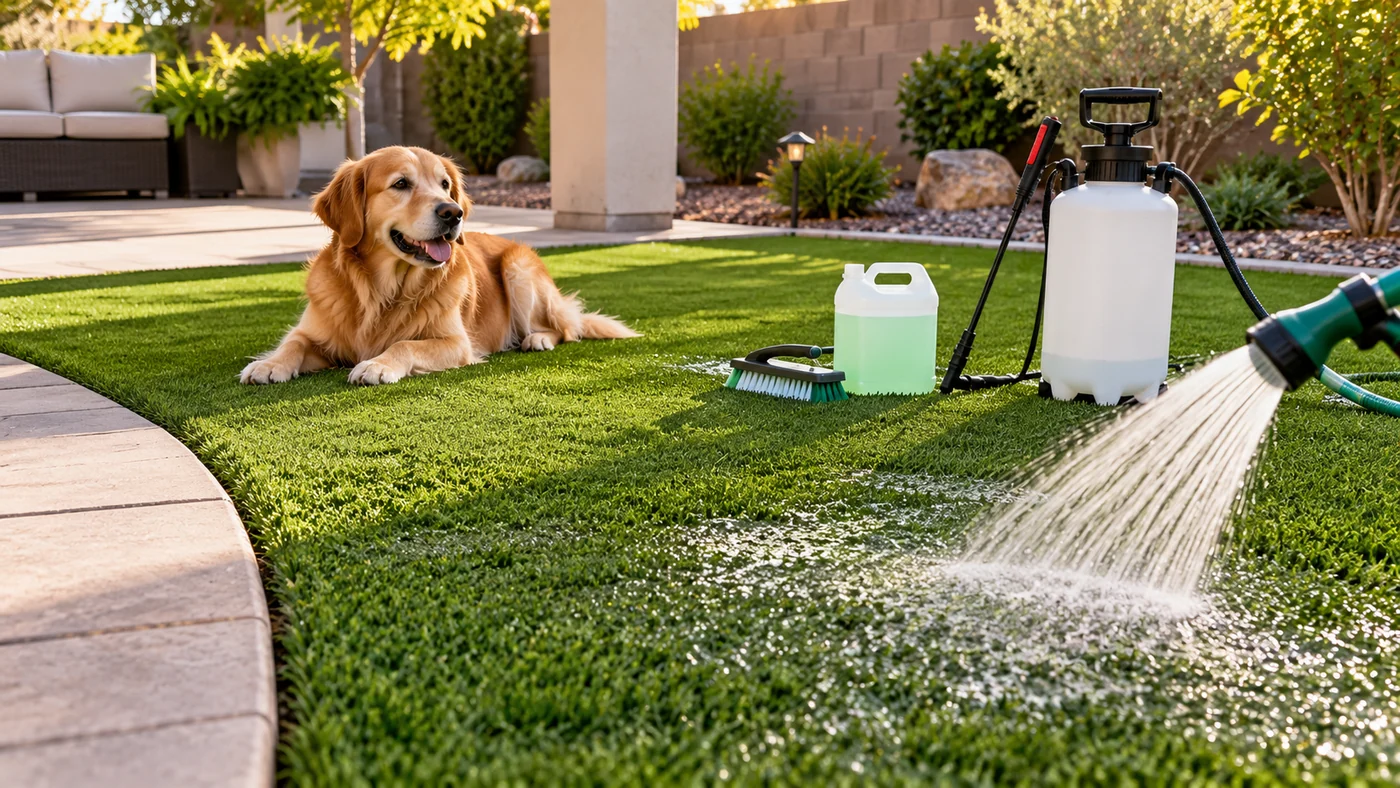
Removing pet odor from artificial grass is less about adding fragrance and more about reaching the residue that remains after urine drains away. On pet-used turf, odor can cling to the plastic blades, collect on the backing and migrate into the infill. Hot weather can make those odors more noticeable. A good maintenance plan combines fast rinsing, a turf-compatible odor treatment with enough contact time, and periodic attention to drainage and infill.
What Is the Best Pet Deodorizer for Artificial Grass?
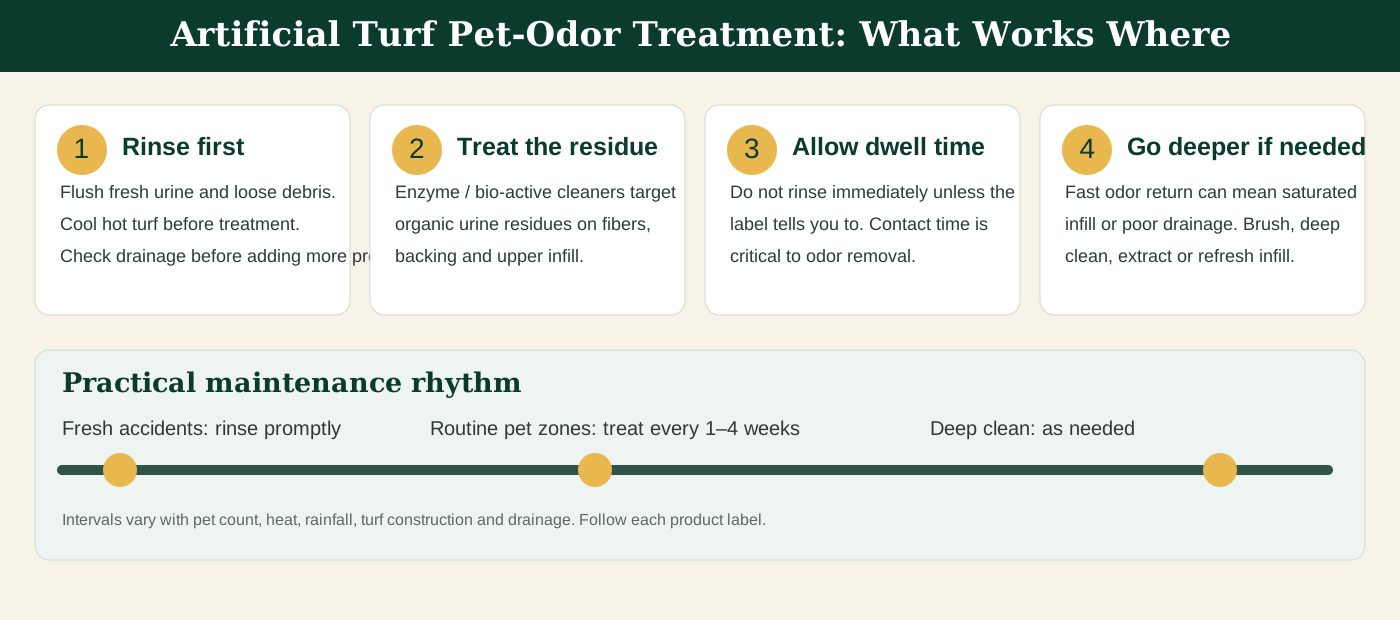
For most dog-used turf, the best pet deodorizer for artificial grass is a turf-safe enzyme, bio-active or oxidizing treatment that reaches the urine residue instead of simply covering the smell with fragrance. The right product depends on how heavily the area is used, how well the turf drains and whether the odor is still near the surface or has migrated into the infill.
If you are searching for an artificial grass pet deodorizer, look first for a product specifically labeled for synthetic turf or outdoor pet areas. For light, recent odor, regular rinsing plus a turf-safe treatment may be enough. For persistent odor that returns soon after treatment, the infill or drainage layer may need deeper cleaning.
Why Artificial Grass Develops Pet Odor
Synthetic grass does not absorb urine the way soil does. The liquid should drain through the perforated backing, but salts, proteins and other organic residues can remain on the fibers, backing and infill. Repeated use of the same pet-relief area concentrates that residue. Heat accelerates odor release, while pet hair, leaves and compacted infill can slow drainage and trap moisture.
What usually makes odor worse
- Several pets using the same small area.
- Little or no routine rinsing.
- Hot, sunny turf that dries urine residue quickly onto the surface.
- Compacted or poorly draining infill.
- Hair, leaves and debris blocking the turf base.
- Repeatedly spraying fragrance without removing the source.
What usually helps most
- Immediate removal of solid waste.
- Regular water flushing where drainage is good.
- Enzyme, bio-active or oxidizing treatments designed for outdoor pet areas.
- Correct dwell time.
- Brushing to keep fibers open and redistribute infill.
- Deep cleaning when odor has migrated below the surface.
Which Treatment Type Is Best?
| Treatment | How it works | Best for | Typical reapplication | Main tradeoff |
|---|---|---|---|---|
| Enzyme / bio-active cleaner | Uses enzymes and/or beneficial microbes to break down organic odor residue. | Routine dog-urine odor and established pet areas. | Often weekly to every 2–4 weeks, depending on pet load and product directions. | Needs adequate dwell time and may lose effectiveness if applied to very hot turf. |
| Oxidizing / sanitizing treatment | Targets odor-causing compounds or microbes using an oxidizing or sanitizing chemistry. | Busy multi-pet yards, kennels and maintenance where microbial control is also desired. | Commonly every 1–4 weeks in high-use zones. | Follow the label carefully; sanitizers and enzyme products should not be casually mixed. |
| Citrus / odor-neutralizing cleaner | Uses solvents, surfactants or fragrance-based ingredients to neutralize and clean odor residue. | Spot treatment and owners who prefer a noticeable fresh scent. | As odor returns; often more frequent in heavy-use pet turf. | Strong scent can be a positive or negative; not every formula penetrates deep infill. |
| Deodorizing infill additive | Granules are brushed into the turf to absorb moisture or help neutralize odors below the blade surface. | Persistent odor that seems to live in the infill rather than on the fibers. | Longer-lived than a spray, but service life depends heavily on rainfall, pet use and product. | Requires even distribution and may eventually need replenishment. |
| Water-only rinse | Dilutes and flushes fresh urine through the drainage system. | Immediate maintenance after fresh pet use. | As often as practical. | Helpful maintenance, but not enough for established odor buildup. |
Reapplication ranges above are practical maintenance ranges, not guarantees. Product labels take priority. Weather, turf temperature, rainfall, drainage, pet count and the depth of contamination can change how long a treatment seems effective.
Representative Pet-Turf Odor Products
The products below represent different treatment approaches. We are not treating star ratings as laboratory evidence; owner feedback is most useful for spotting recurring themes such as ease of application, scent strength, repeat-treatment needs and performance in heavily used pet areas.
| Product | Type / application | What stands out | Generic review themes | Maintenance / treatment life |
|---|---|---|---|---|
| Simple Green Outdoor Odor Eliminator | Bio-active/enzyme-style outdoor odor treatment; hose-end application. Manufacturer directs users to remove waste, saturate the area and keep it damp long enough for the active microorganisms to work. | Specifically labeled for grass, artificial turf, gravel, concrete, brick and pet areas. Hose-end bottle is convenient for whole-yard coverage. | Owners of hose-end products generally value speed and broad coverage. Recurring complaints with this category are that severe odor may need repeat applications and that hot, sunny turf can dry too quickly. | Simple Green recommends weekly cleaning for artificial turf to prevent heavy buildup; heavily soiled areas may need repeat treatment. |
| TurFresh BioS+ | Enzymatic artificial-turf cleaner; hose-end or pump sprayer. Pre-rinse, apply evenly, allow dwell time, then follow current label directions. | Designed specifically for pet odor on synthetic turf and marketed for persistent urine odor. | Positive themes center on turf-specific formulation and easy hose-end coverage. The most common practical limitation is that treatment works best when the turf is cool and sufficiently wet for the active ingredients to work. | TurFresh currently suggests repeating every 2–4 weeks for routine maintenance, with more frequent attention in high-use zones. |
| TurFresh BioX+ | Oxidizing/odor-control turf cleaner applied by hose-end sprayer. | Positioned for everyday odor and bacteria control rather than only stubborn urine residue. | Owners looking for a maintenance product tend to value simple application and multiple scent options. As with any chemistry-based treatment, users need to follow the product instructions rather than mixing it with other cleaners. | Manufacturer guidance is generally every 2–4 weeks, adjusted for pet density and conditions. |
| Wysiwash Sanitizing System | Hose-end sanitizing system using dissolving caplets; spray the turf and allow to dry. | Designed around fast treatment of large outdoor areas and marketed for turf deodorizing without a separate rinse step. | Review themes emphasize convenience and rapid full-yard coverage. The tradeoff is a higher initial cost for the applicator system compared with a single bottle of cleaner. | Best viewed as a recurring maintenance system rather than a one-time permanent treatment; frequency depends on pet use and odor return. |
| Nature's Miracle Outdoor Stain & Odor Remover | Ready-to-use bio-enzymatic spray; saturate, allow 15 minutes, then rinse artificial turf. | Made for multiple outdoor surfaces including artificial turf; convenient powered/continuous sprayer format. | Users of ready-to-use formulas generally like not having to mix concentrate. The cost per square foot can be higher for a large yard than concentrated hose-end products. | Use as odor returns; tough odors may require retreatment. No fixed turf lifespan is promised. |
| Angry Orange Pet Odor Eliminator Concentrate | Citrus-oil odor treatment mixed with water; product is listed for use on turf and other household/outdoor surfaces. | Strong citrus scent and concentrated format; useful for targeted odor treatment. | Owner feedback frequently highlights the strong orange scent—liked by some and too strong for others. For large synthetic lawns, application method and penetration matter as much as scent. | Reapply when odor returns. The citrus scent fades faster than the underlying cleaning effect, so scent duration should not be treated as treatment lifespan. |
| TurFresh TurFill | Granular deodorizing infill brushed into the turf. | Targets odor in the infill layer where spray-only treatment may not reach as effectively. | Owners considering infill products generally value passive, ongoing odor control. The main downsides are added installation work and uncertainty about replenishment frequency in heavily used or frequently rinsed turf. | Potentially longer-lived than spray treatments, but no universal service interval applies; inspect and replenish based on odor, pet load and infill loss. |
How Long Does a Pet-Odor Treatment Last?
There is no single honest lifespan for artificial-turf odor treatment. The treatment does not create a permanent barrier: new urine is added every time a pet uses the area. What owners experience as “lifespan” is really the time until new contamination builds enough to become noticeable again.
These bars are an editorial maintenance illustration, not test results or manufacturer guarantees. A one-dog yard with excellent drainage can stay fresh far longer than a small multi-dog run in hot weather.
Best Application Method for Large Turf Areas
Hose-end sprayer
Usually the easiest choice for an entire backyard. It gives even coverage and enough water volume to help treatment reach into the fiber bed. This is especially useful for concentrates designed to meter automatically.
Pump sprayer
Better for targeted zones, small yards and indoor or balcony turf where too much water would be a problem. Mark the bottle so it is never confused with lawn chemicals.
Trigger or powered spray bottle
Convenient for isolated spots, edges and small pet runs. It is less efficient for hundreds of square feet.
Dry infill application
Spread the material evenly, then brush against the grain so granules settle down into the infill rather than sitting on top of the blades.
A Practical Step-by-Step Cleaning Routine
Pet waste, hair, leaves and dust consume cleaner and interfere with drainage.
Use a hose to flush loose residue downward and cool the turf before treatment.
A stiff synthetic-bristle broom opens the pile and helps expose compacted pet zones.
Use the dilution and coverage rate on the label. More concentrate is not automatically better.
Do not immediately rinse away a product that needs time to work. Nature's Miracle specifies 15 minutes for its outdoor formula; TurFresh emphasizes at least about 10 minutes for BioS+ in its guidance.
Some products are meant to be rinsed, while others are left to dry. Follow the specific product directions.
Restrict pet traffic until the product directions say the area is safe to use again.
If smell returns within a day or two after a correct application, suspect saturated infill, trapped organic debris or drainage problems.
What Generic Customer Reviews Tend to Reveal
Ease of application matters
Hose-end products tend to receive favorable comments when users can cover the whole lawn quickly without measuring and carrying multiple spray bottles.
Strong fragrance divides owners
Citrus and scented products can make a yard smell noticeably fresher, but fragrance preference is subjective. A strong scent is not proof that urine residue has been fully removed.
Heavy-use dog zones need repeat treatment
Across product categories, recurring odor is much more common in small areas used by multiple dogs. Owners often get better results by shortening the maintenance interval rather than increasing concentration.
Coverage claims depend on saturation
A bottle may theoretically cover a large area, but pet zones often need more product because the treatment must penetrate the fibers and upper infill rather than lightly misting the blade tips.
Heat changes the experience
Artificial turf can become very hot in sun. Products that need wet contact time perform more predictably when applied early or late in the day.
Fast odor return points below the surface
When a cleaner works briefly and the odor returns immediately, owners may blame the formula when the real issue is saturated infill, pet hair, poor drainage or contamination beneath the turf.
These are generalized ownership themes, not a ranking. Individual product reviews may involve different turf installations, pet loads, climates and application methods.
When Spray Treatment Is Not Enough
Artificial turf can reach a point where more deodorizer is not the economical answer. If odor comes back within 24–48 hours after a thorough rinse, correct treatment and full dwell time, inspect the system itself.
- Brush and decompact the infill. Compacted material can hold moisture and restrict drainage.
- Remove pet hair and organic debris. A turf rake or stiff synthetic broom can lift material that ordinary rinsing misses.
- Flush the base thoroughly. If drainage allows, a deeper water rinse can move dissolved residue through the backing.
- Consider infill removal or replenishment. Severely contaminated infill can become the odor reservoir.
- Check the base and drainage. Standing water or a poorly draining sub-base will defeat almost any surface cleaner.
- Consider professional extraction. High-use dog runs and older installations may benefit from equipment that reaches below routine spray depth.
What About Vinegar, Baking Soda and Bleach?
Vinegar
A diluted vinegar rinse is often suggested as a low-cost deodorizing option. It may help with light surface odor, but it is not a substitute for a turf-specific cleaner when urine has accumulated in the backing or infill. Always confirm compatibility with the turf manufacturer.
Baking soda
Baking soda can absorb some odor, but powder can be difficult to remove from dense synthetic grass and can accumulate in infill. It is better treated as an occasional spot approach than a default whole-yard maintenance method.
Bleach and strong disinfectants
Do not improvise with high-strength bleach, ammonia or mixed household chemicals. They can damage materials, harm landscaping, create irritating fumes or interfere with biological products. Use a product specifically labeled for the surface and application.
How Often Should You Clean Artificial Grass With Dogs?
| Use level | Rinse | Odor treatment | Deep maintenance |
|---|---|---|---|
| One dog, large yard | Spot-rinse several times per week or after concentrated use. | Every 2–4 weeks is a reasonable starting point. | Seasonally or when odor begins returning quickly. |
| Two or more dogs | Frequent rinse of preferred relief zones. | Weekly to every 2–3 weeks, depending on odor and product label. | Every 1–3 months in heavily used areas. |
| Small dog run / kennel | Daily or near-daily flushing may be needed. | Often weekly or more often under heavy use. | Regular brushing, drainage inspection and periodic deep cleaning. |
| Occasional pet use | Rinse after accidents or concentrated use. | As needed. | Usually infrequent. |
These are maintenance starting points, not rules. Follow turf-manufacturer care guidance and the treatment label.
Buying Checklist
- Explicitly states it can be used on artificial turf or synthetic grass.
- Clear dilution and dwell-time instructions.
- Application format that matches your yard size.
- Pet re-entry guidance on the label.
- Coverage information you can translate into cost per treatment.
- Scent level you are comfortable living with.
- Concentrate availability if you have a large yard.
- A plan for infill and drainage if odor is already severe.
The Bottom Line
The best way to remove pet odors from artificial grass is to treat the entire turf system rather than only the visible blades. Water handles fresh residue. Enzyme, biological and oxidizing products handle established organic odor. Infill care and drainage solve the deeper problems that sprays cannot reach.
For most pet households, the winning routine is simple: pick up, rinse, treat while cool, allow the product to work, then repeat on a predictable schedule.
What we would avoid
- Using fragrance alone as the treatment.
- Applying enzyme products to scorching-hot turf.
- Rinsing a dwell-time product off immediately.
- Assuming more concentrate always works better.
- Mixing cleaners or sanitizers unless the manufacturer explicitly allows it.
- Ignoring drainage when odor keeps coming back.
More Outdoor Living Guides
Research & Source Notes
This article compares treatment categories and representative products using current manufacturer instructions and product information available on September 28, 2026. Product formulas, directions and availability can change; always follow the current package label.
- Simple Green — Outdoor Odor Eliminator
- Simple Green — How to Clean Artificial Grass (Dog Urine)
- TurFresh — BioS+ Enzymatic Artificial Turf Cleaner
- TurFresh — BioS+ Application Guidance
- TurFresh — BioX+ Artificial Turf Cleaner
- TurFresh — TurFill Deodorizing Infill
- Wysiwash — Artificial Turf Deodorizing Guidance
- Nature's Miracle — Outdoor Stain & Odor Remover
- Angry Orange — Pet Odor Eliminator Concentrate
Home & Workshop Journal does not treat manufacturer marketing claims as independent performance tests. Product discussion above distinguishes label directions and manufacturer claims from generalized owner-feedback themes.