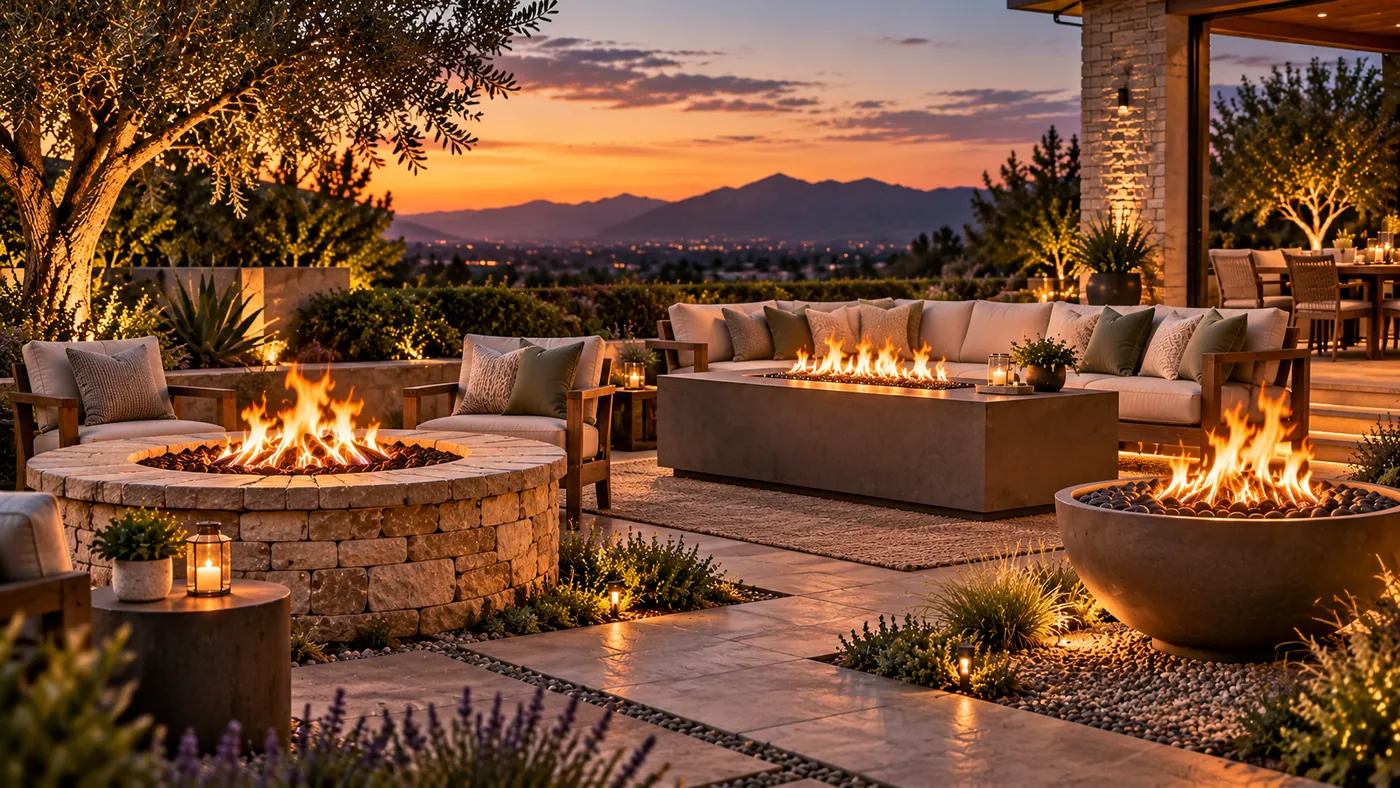
The easiest way to make this decision is to stop thinking about the name and picture a normal evening on your patio. Are people pulling chairs up to a real fire? Are you setting drinks and appetizers around a clean gas flame? Or do you want something low and architectural that looks good even when it is turned off? That answer usually points you in the right direction faster than BTU numbers do.
Fire Pit vs. Fire Table vs. Fire Bowl
| Type | Best for | Common fuels | Main tradeoff |
|---|---|---|---|
| Fire pit | Casual seating, bigger flame feel, roasting and sometimes cooking | Wood, pellets, propane, natural gas | Wood versions create smoke, sparks and ash |
| Fire table | Entertaining, drinks, smaller patios, cleaner furniture-like layout | Propane or natural gas | Usually costs more than a basic pit and feels less like a campfire |
| Fire bowl | Design-focused patios and low conversation seating | Usually propane or natural gas; some wood | Less tabletop space and often more decorative than practical |
1. Fire Pits: The Most Campfire-Like Choice
If the whole reason you want a fire feature is to sit around an actual fire, a traditional pit is hard to beat. Wood gives you crackle, smell and a more natural flame. Pellet-burning designs can cut down on smoke while keeping real-fuel character. Gas pits trade some of that atmosphere for push-button convenience.
The downside is obvious once you have lived with one: wood means ash, sparks, smoke direction and fuel storage. That is fine if you enjoy tending a fire. It gets old if what you really wanted was ten minutes of flame after dinner.
2. Fire Tables: The Easiest Everyday Entertainer
A fire table is usually the easiest type to work into a finished patio because it behaves like furniture. You get a burner in the middle and enough surrounding surface for glasses, small plates or a burner cover when the fire is off. Most are propane or natural gas, so there is no ash and very little cleanup.
This is the category I would look at first for a patio where people actually eat, talk and spend a few hours. It is less rustic than a wood pit, but it is usually much easier to use on a random weeknight.
3. Fire Bowls: More Sculpture, Less Furniture
A fire bowl is really a design decision. It sits lower, keeps the visual weight down and can look great in a modern or resort-style seating area. Concrete bowls in particular can make a patio feel more intentional without putting a big table in the middle of the conversation area.
You give up some usable surface compared with a fire table, so think of the bowl as the flame centerpiece rather than the place everyone sets a drink.
Fuel Choice Changes the Experience
| Fuel | What it is like | Watch for |
|---|---|---|
| Wood | Best aroma and traditional flame; can also cook over it | Smoke, sparks, ash, local burn restrictions and storage |
| Wood pellets | Real-fuel flame with a cleaner, more controlled burn in purpose-built pits | You need dry pellets and the appliance is designed around that fuel |
| Propane | Portable, simple ignition, no permanent gas line | Tank replacement and where the tank is hidden |
| Natural gas | No tanks to refill; very convenient once installed | Permanent location and professional gas-line work |
How Much Heat Do You Really Need?
Outdoor heat is messy because wind carries it away. A bigger BTU number helps, but seating distance and flame location matter just as much. A low fire bowl can feel warm close to the flame while doing very little several feet away. A broad gas table can spread people naturally around the heat source.
For reference, many standard Elementi fire tables are around the 45,000-BTU range, while some larger premium units go higher. The Outdoor GreatRoom Havenwood model listed below is rated at 55,000 BTU. Those numbers are useful for comparison, but do not treat them like indoor furnace ratings.
Current Models Worth Comparing
Elementi Hampton Fire Pit Table
A good example of the classic concrete gas fire-table format. It gives you a substantial furniture-like centerpiece rather than a portable pit. Pristine Home & Wellness currently lists the Hampton among its Elementi best sellers.
Elementi Lunar Bowl Fire Pit Table
This is the model to look at if you like the lower, sculptural fire-bowl look. Elementi uses glass-fiber-reinforced concrete across much of the line, and standard models typically use stainless burners around 45,000 BTU.
Modern Blaze Smooth Outdoor Gas Fire Bowl
If you want a true fire bowl rather than a table with a bowl-like profile, the Modern Blaze Smooth is worth comparing. Its freestanding round body is made from glass-fiber-reinforced concrete (GFRC), with sizes from 27 to 76 inches wide and a choice of natural gas or liquid propane. The stainless-steel burner uses simple match-lit ignition with no electrical connection required, and the bowl can be finished with fire glass, lava rock or optional log media. It is a strong option for a low, architectural focal point where you do not need built-in table surface.
Outdoor GreatRoom Havenwood Rectangular Gas Fire Pit Table
A more furniture-like rectangular table: 44 × 30 × 24.5 inches with a 55,000-BTU Crystal Fire Plus burner. It ships set up for propane and includes a natural-gas conversion kit, plus a burner cover and fire glass.
Pit Boss Cowboy Fire Pit
This one is for people who want the fire pit to do more than look good. It is a wood-burning 2-in-1 pit with a swivel cooking grate, 483 square inches of cooking surface, a 24.8-inch grid diameter, spark screen, ash cleanout and wraparound shelf.
Pit Boss Smokeless Fire Pit
A different approach: this double-wall steel pit burns hardwood pellets and is designed for a cleaner, nearly smokeless burn. It is about 22.8 inches across and weighs roughly 34 pounds, so it is much easier to move than a cast-concrete fire table.
Prices and availability change frequently, so use the linked retailer/manufacturer pages for current pricing before buying.
What to Measure Before You Buy
- Seating circle: leave enough room to walk behind chairs without brushing the fire feature.
- Combustible clearances: check the exact manual, especially near roofs, pergolas, siding and furniture.
- Surface strength: cast-concrete tables and bowls can be very heavy.
- Fuel path: decide where a propane tank will sit or where a natural-gas line can realistically run.
- Wind: exposed patios may benefit from a wind screen on gas burners.
Safety Is Not the Place to Guess
Outdoor fire features need open-air ventilation and manufacturer-specified clearances. Do not assume a product is safe under a covered patio just because it physically fits. Check the manual, local fire restrictions and any HOA rules before ordering. Wood pits also need a stable noncombustible base and enough distance for sparks; gas appliances need leak-free connections and the correct fuel configuration.
Which One Would I Choose?
Choose a fire pit if…
You want a real-fire experience, enjoy tending the flame, or want to cook over it.
Choose a fire table if…
You entertain often and want the fire feature to function like part of the patio furniture.
Choose a fire bowl if…
You care most about a low, architectural look and already have side tables nearby.
Choose pellet “smokeless” if…
You like real fuel but want less smoke and a more portable footprint.
How Far Should a Fire Pit Be From the House?
Once you pick the type of fire feature, placement matters just as much. See our fire pit distance and clearance guide for the 10-foot general baseline, overhead clearance, wind and local-rule considerations.
Bottom Line
There is no universal winner. A fire pit is the most fun if you genuinely want a campfire. A fire table is the easiest choice for regular entertaining. A fire bowl is the cleanest design statement. Pick the way you want to use the patio first, then choose fuel, size and style.
Best place to start
- Real-fire feel: wood or pellet fire pit.
- Easy weeknight use: propane or natural-gas fire table.
- Modern low profile: gas fire bowl.
- Entertaining: prioritize usable table surface and seating clearance.
Related: If you are considering a fire table under a patio roof, see Can You Put a Fire Table on a Covered Patio?
Research Sources & Methodology
This guide compares current manufacturer and authorized-dealer specifications with practical differences in fuel, form factor and intended use. Representative models are examples, not a claim that one model is best for every patio.