
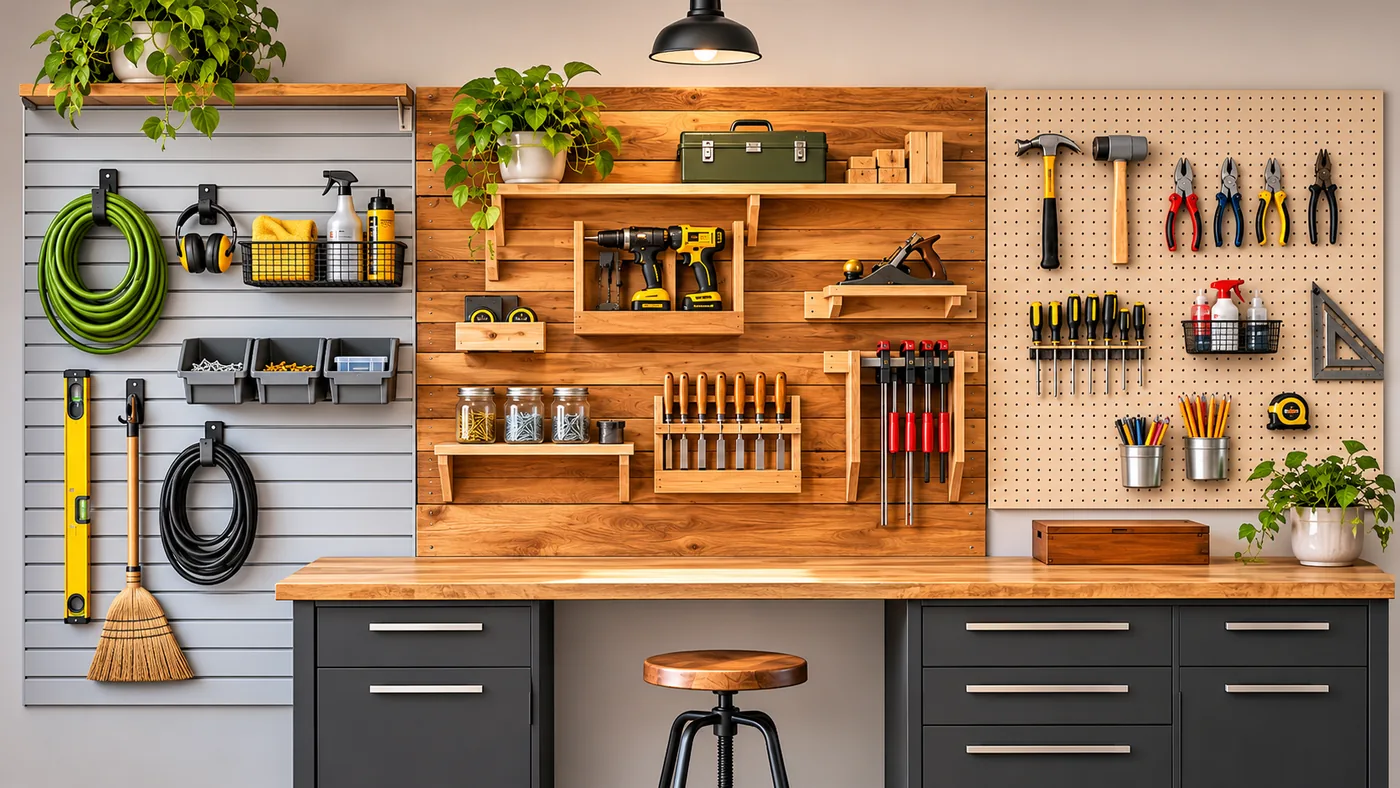
If the floor of your garage is doing most of the storage work, the wall is the next place to look. The three most common garage wall storage systems—slatwall, French cleats and pegboard—can all organize tools and gear, but they solve the problem in very different ways. The best choice depends on whether you value a finished look, DIY flexibility, load capacity or the lowest possible cost.
Garage Wall Storage Systems at a Glance
| System | Best for | Strength | Flexibility | Installation | Look |
|---|---|---|---|---|---|
| Garage slatwall | Mixed tools, sports gear, bins and accessories | Medium to high* | Excellent | Moderate | Finished / built-in |
| French cleat wall | Woodworking tools, cabinets and custom holders | High* | Excellent | DIY-intensive | Workshop / custom |
| Pegboard | Hand tools and light accessories | Light to medium* | Good | Easy | Basic / utilitarian |
*Actual capacity depends on the panel material, fasteners, stud attachment, accessory rating and how the load is distributed. Follow the wall-system manufacturer's installation and load instructions.
Garage Slatwall
Best all-around systemSlatwall uses horizontal channels that accept hooks, baskets, shelves and specialty holders. In a garage, that means you can move storage around without drilling new holes every time your needs change.
Why it works
- Very fast to rearrange
- Wide accessory selection
- Handles tools, extension cords, bikes and yard gear
- Creates a cleaner finished appearance than open studs or pegboard
Watch for
Not all slatwall panels or accessories are interchangeable. Panel material and attachment method also affect how much weight the wall can safely support.
French Cleat Wall
Best DIY valueA French cleat wall uses beveled horizontal strips—often plywood or solid wood—so matching cleats on tool holders, cabinets and shelves can hook onto the wall and be moved later.
Why it works
- Excellent for custom tool holders
- Can support substantial loads when properly built and anchored
- Uses common workshop materials
- Easy to expand one holder at a time
Watch for
It takes more shop time than installing a ready-made panel system. A full wall also projects farther from the wall than thin pegboard.
Pegboard
Best budget optionPegboard remains useful because it is inexpensive, familiar and easy to install. For screwdrivers, pliers, wrenches and other lighter tools, it can organize a lot of equipment in very little space.
Why it works
- Low entry cost
- Lots of basic hooks available
- Easy to see every tool
- Good for small garages and workbench zones
Watch for
Traditional fiberboard pegboard is not the first choice for heavy cabinets or bulky equipment. Metal pegboard systems can be stronger, but they move into a different price range.
Slatwall Garage Storage: Where It Makes the Most Sense
The strongest case for slatwall garage storage is a garage that has to do several jobs at once. A single wall can hold yard tools in spring, sports equipment in summer and bins or holiday gear later in the year.
That adaptability is why slatwall works particularly well on the wall beside a parked vehicle, where floor-standing shelves can steal too much clearance. Hooks and baskets can be kept shallow while larger shelves are placed only where the car door does not need the space.
Garage slatwall installation basics
When a French Cleat Wall Is Better
If your garage is really a woodworking or maker space, French cleats are hard to beat. Instead of buying a separate proprietary hook for every tool, you can build holders that fit exactly what you own.
A cleat wall is especially useful above a DIY workbench, because tool racks, small shelves and charging stations can move as the bench setup changes.
Good French cleat candidates
- Drills and drivers
- Clamps
- Small parts bins
- Router accessories
- Hand planes and measuring tools
- Small cabinets and shelves
When Pegboard Is Still the Right Answer
Pegboard does not need to win every category to be useful. It is still a smart choice for a compact hand-tool station where the load is light and you want every tool visible.
For example, a narrow pegboard panel above a bench can hold marking tools, pliers and screwdrivers while heavier saw accessories live on shelving or a cleat system. You do not have to use one storage system for the entire garage.
How We Would Choose
| If your priority is… | Choose | Why |
|---|---|---|
| A polished garage with lots of accessory options | Slatwall | Easy to reconfigure and visually clean |
| A workshop wall you can customize yourself | French cleats | Strong, flexible and easy to build holders for |
| The least expensive way to organize hand tools | Pegboard | Simple and widely available |
| Bikes, yard tools and mixed household gear | Slatwall | Specialty hooks and baskets handle varied shapes |
| Heavy custom cabinets or tool stations | French cleats | Can be designed around the exact load and holder |
A Practical Hybrid Garage Wall
For many garages, the best answer is not one system. A practical layout might use slatwall near the garage door for yard tools and sports gear, French cleats above the workbench for custom tool storage, and a small pegboard panel for lightweight hand tools.
That keeps expensive accessories where they add the most value and lets DIY storage handle the workshop side of the room.
Garage Wall Storage FAQ
Is garage slatwall worth it?
It can be if you want a finished-looking system that can be rearranged often. The value is less about the panel itself and more about being able to move hooks, baskets and shelves without repeatedly drilling into the wall.
Is a French cleat wall stronger than slatwall?
It can be, but there is no universal answer. Capacity depends on the material, cleat dimensions, fasteners, stud attachment and the holder being used. Commercial slatwall systems also vary substantially in their ratings.
Can I install garage slatwall over drywall?
Many systems are designed to install over finished walls, but the panels still need the attachment method and fastener spacing specified by the manufacturer. Do not assume drywall alone is an adequate structural anchor.
What is the cheapest garage wall storage?
Traditional pegboard is usually the simplest low-cost starting point for lighter tools. A DIY French cleat wall can also be economical if you already have plywood or lumber and can build your own holders.
Should garage storage go on the wall or ceiling?
Put frequently used items on the wall where they are easy to reach. Reserve overhead garage storage for seasonal or bulky items that you do not need every week.
Bottom Line
For an all-purpose garage, slatwall is the easiest system to live with because it is clean, modular and works with many types of gear. For a true workshop, French cleats offer more DIY flexibility. Pegboard remains a good low-cost choice for lighter hand tools.
Where we would start
If the garage serves as both parking space and workshop, start with the wall that creates the biggest floor-space problem. Organize that zone first, then add a second storage system only where it solves a different need.
Installation and Load Notes
Load capacity is intentionally discussed in relative terms because panel systems, cleats, accessories, fasteners and wall construction vary. Always follow the specific manufacturer's installation and load instructions for the system you use.